¶ Eubrics Skill Development Journey – Full Step-by-Step User Documentation
This guide explains the five key steps every user follows in the Eubrics platform to develop skills effectively through structured learning, practical application, and self-reflection.
¶ Key Steps at a Glance
- Go to the Journey
- Enter a Module (e.g., Communicating with Impact)
- Complete All Learning Items
- Access and Complete Action Cards
- View Your Skill Score after Completing an Action Card
¶ 1. Go to the Journey
From your Eubrics dashboard, start your development path by clicking on the "Journey" tab.
- This shows you a curated roadmap of skills and behaviors tailored to your role or career level.
- Each journey is structured around real competencies required in the workplace.
¶ 2. Enter a Module (e.g., Communicating with Impact)
Inside the journey, you'll see modules—each representing a single workplace skill such as:
- Communicating with Impact
- Delegating
- Managing Conflict
- Thinking Institutionally
Select a module to begin. Each module is focused, practical, and designed for your level (entry, junior, mid, senior).
¶ 3. Complete All Learning Items
Each module begins with Learning Items—short, structured content pieces that help you understand the skill.
¶ Learning Items Can Be:
- Articles
- Videos
- Case studies
- Frameworks or tips
You must complete all Learning Items first before you can proceed to Action Cards.
¶ 4. Access and Complete Action Cards
Once all Learning Items are complete, Action Cards for the module are unlocked.
Action Cards guide you through applying the skill in real-life situations.
¶ Each Action Card Includes:
- A focused behavioral prompt
- Real-world work scenario selection
- Space for reflection and feedback
You’ll follow these sub-steps within an Action Card:
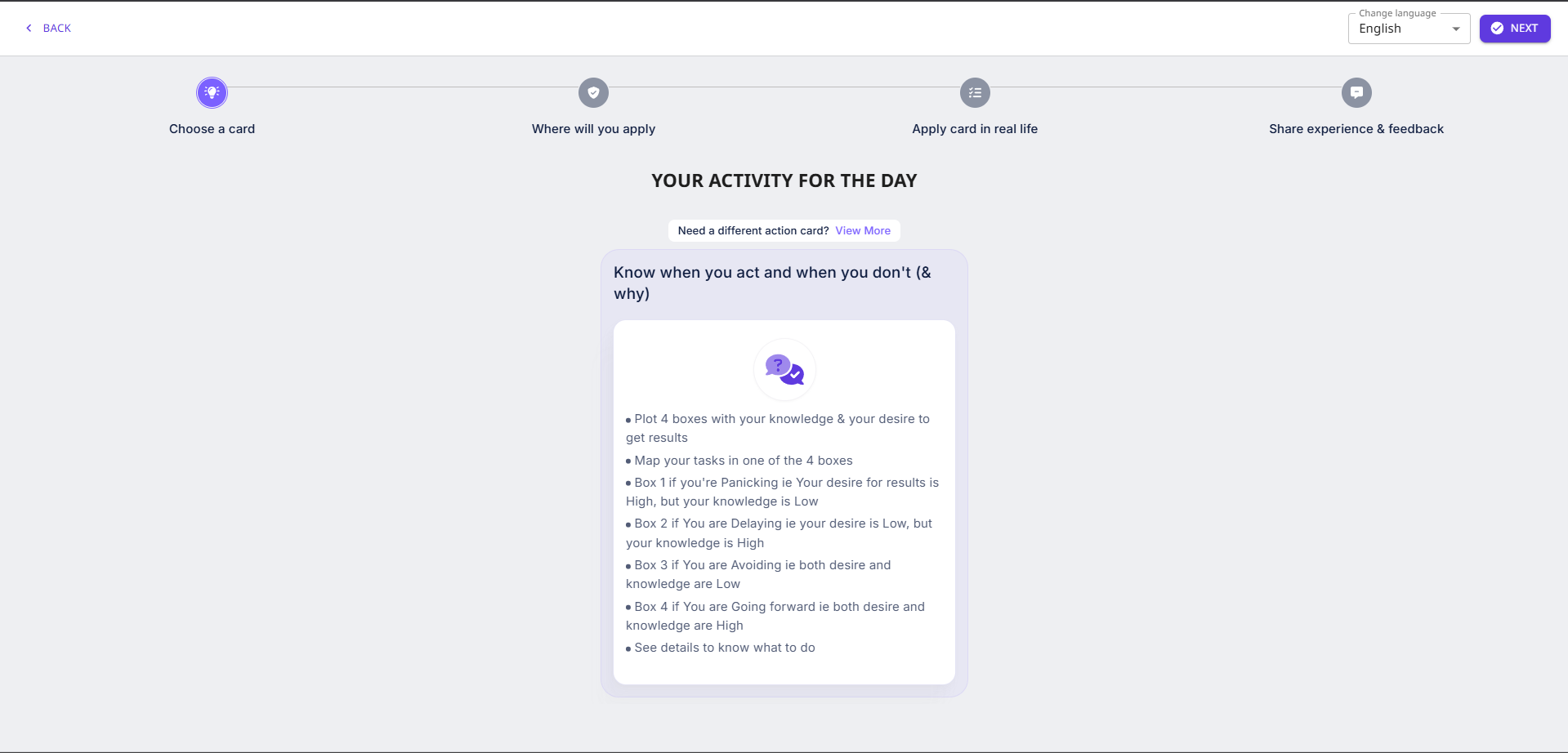
- Choose a Card – Pick the skill behavior you want to apply
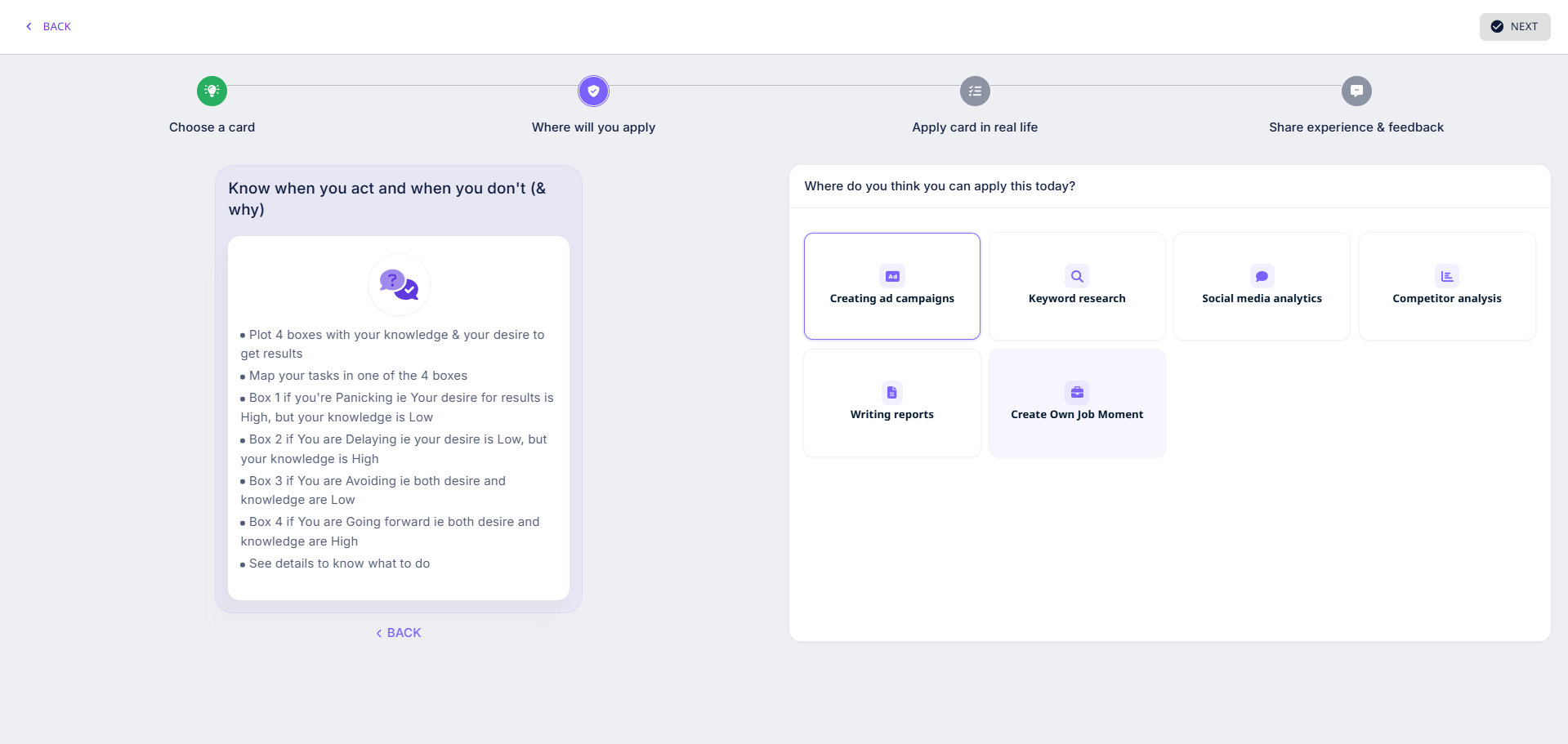
- Where Will You Apply – Select a relevant real-life job moment
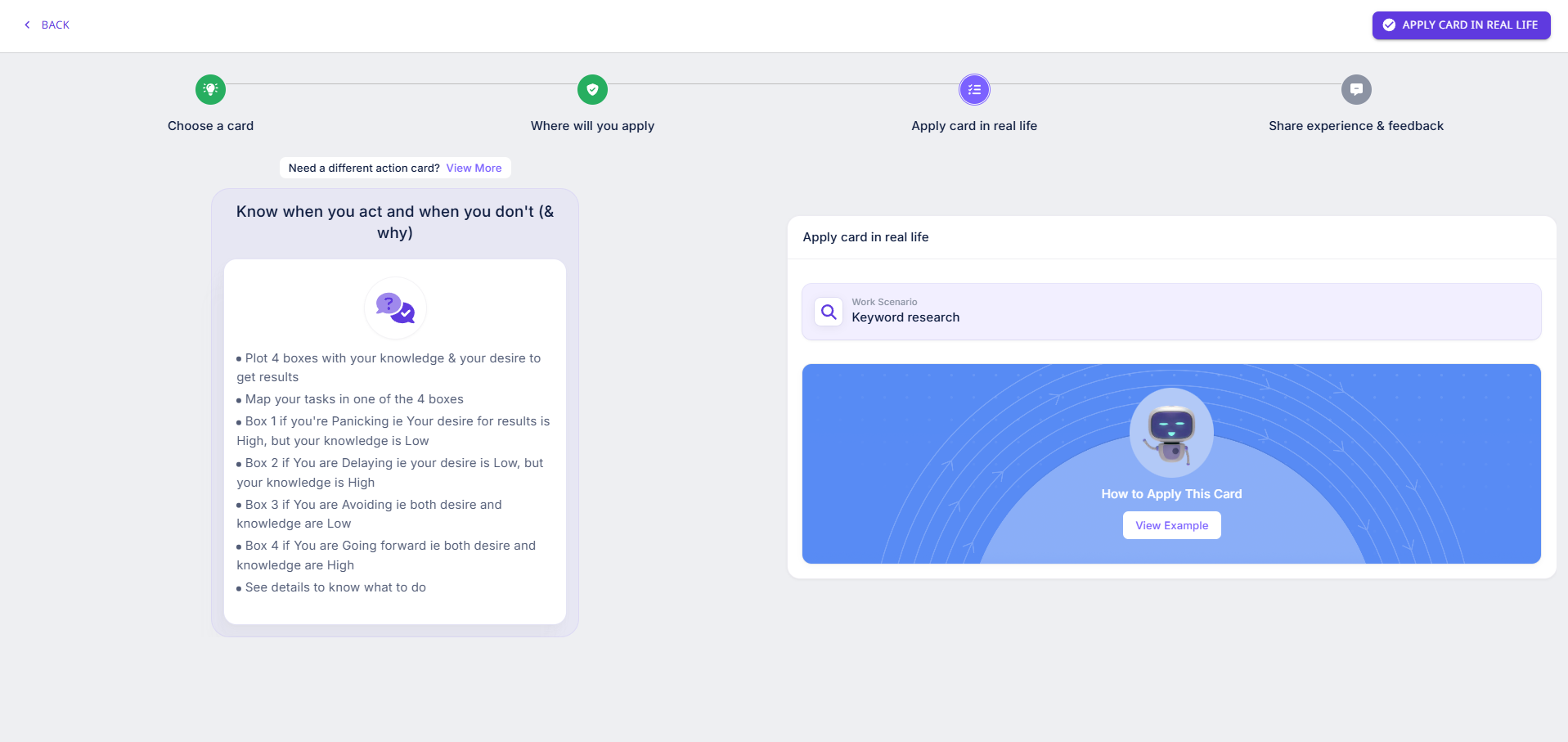
- Apply in Real Life – Practice the behavior on the job
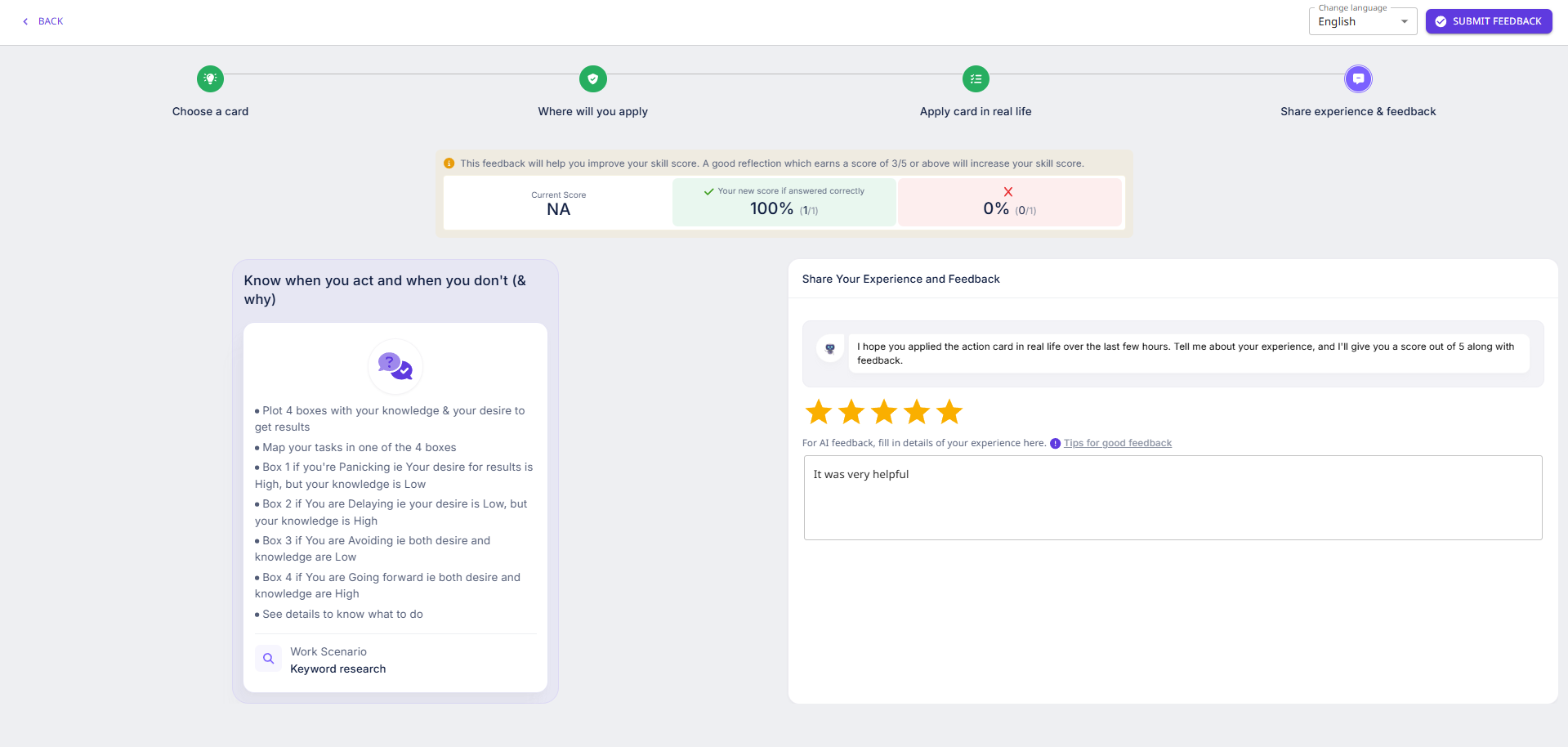
- Share Experience & Feedback – Reflect honestly using a rating and written input
¶ 5. View Your Skill Score
After completing an Action Card and submitting feedback:
- You’ll see your Skill Score, based on your self-assessment and the depth of your reflection.
- The system may show your current score, projected score, and improvement path.
The score helps measure progress and builds a complete profile over time.
¶ Summary: Why This Flow Matters
- Sequential Learning: Each step builds on the last—ensuring you apply what you learn, not just read about it.
- Real Impact: You practice behaviors in actual work scenarios, not simulations.
- Visible Growth: You get tangible, trackable results through skill scores and feedback.
- Personal Relevance: All content is matched to your role, making learning efficient and effective.
By following these five steps, you make your skill development measurable, practical, and aligned with your daily work.